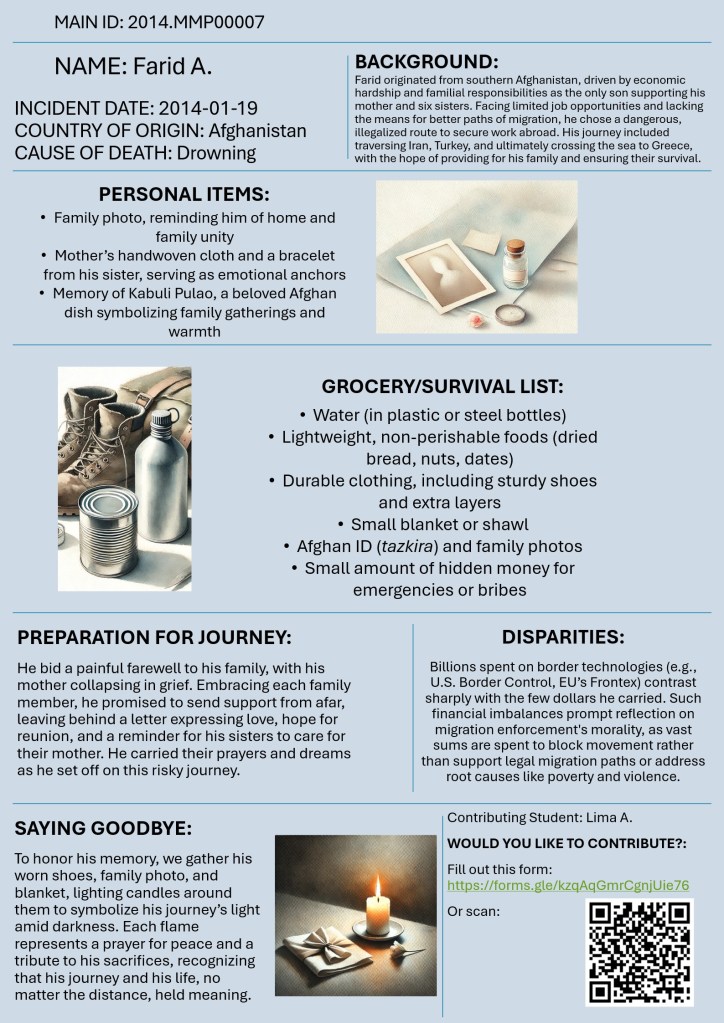
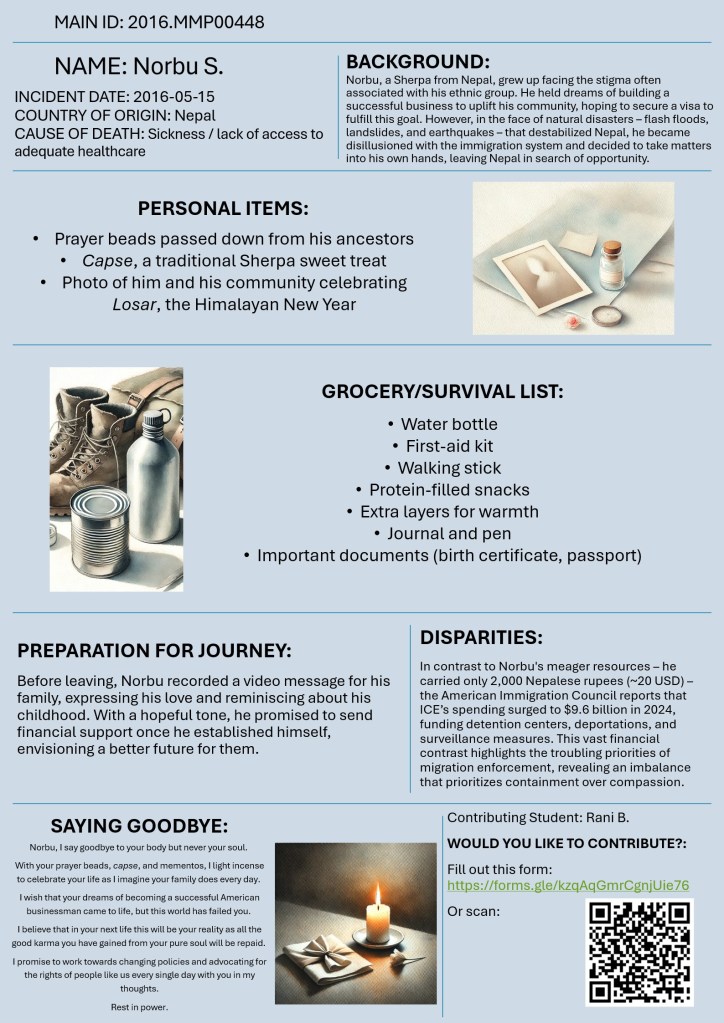
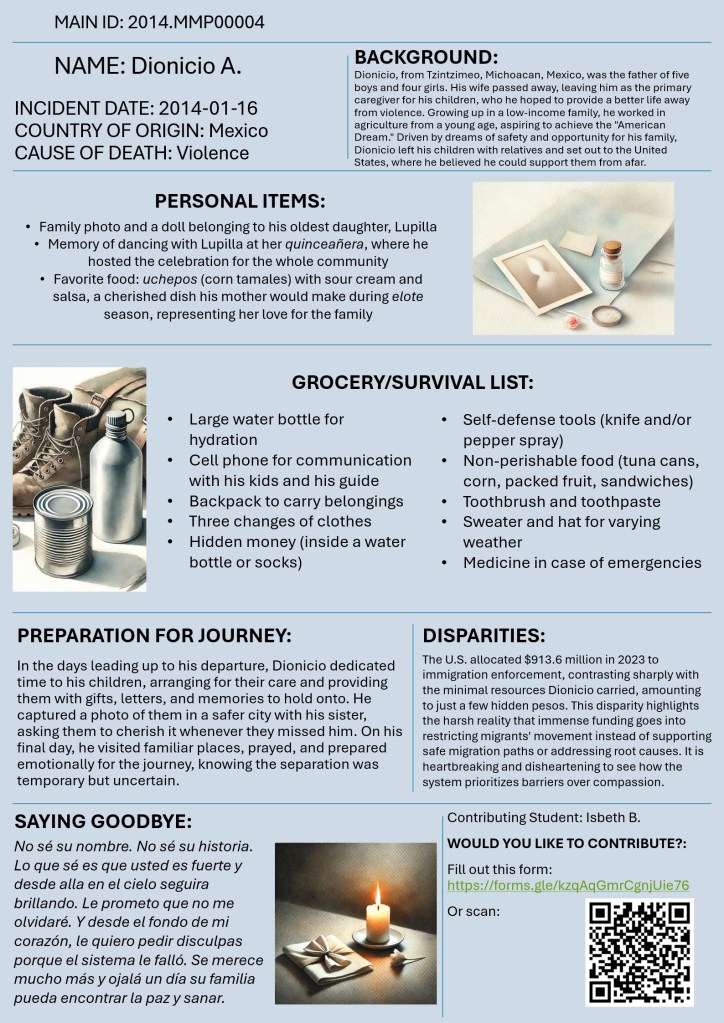
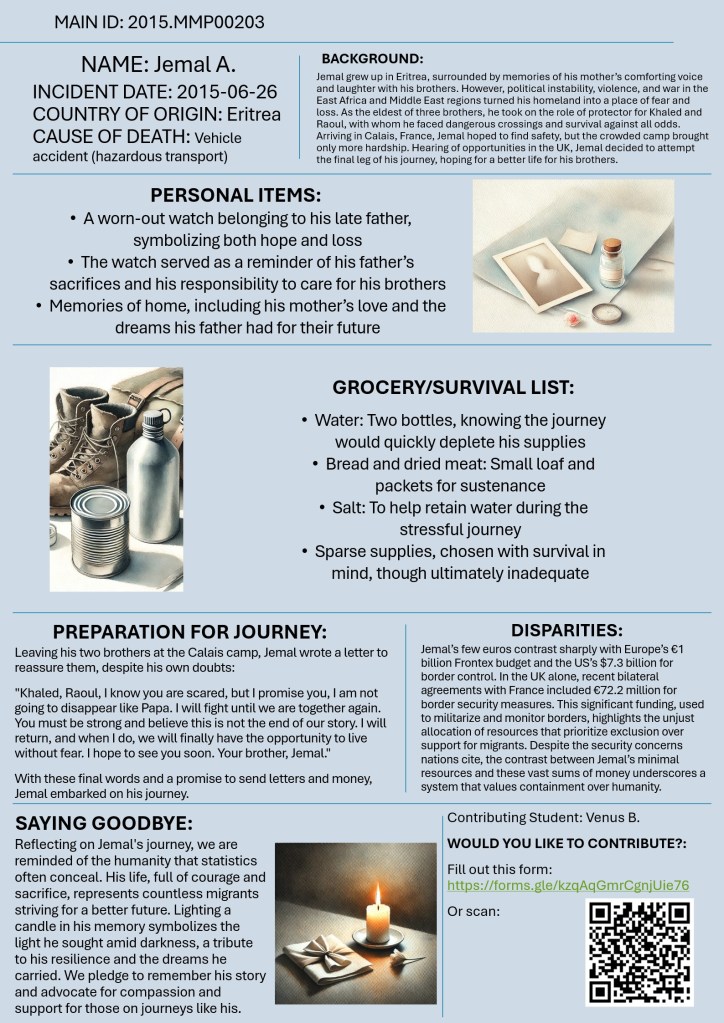
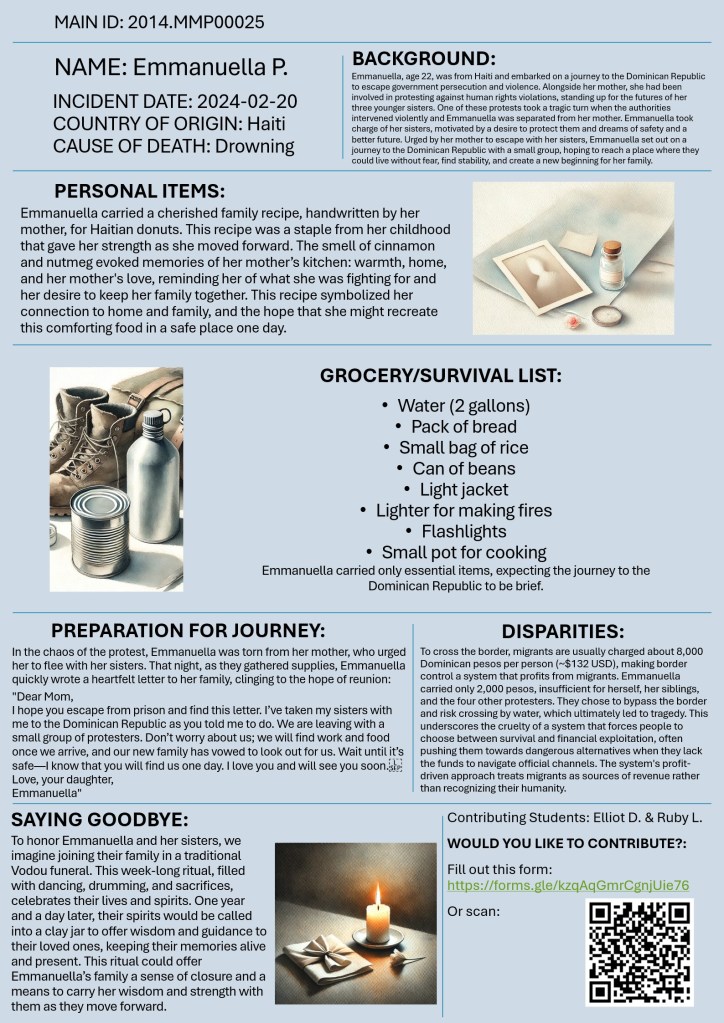
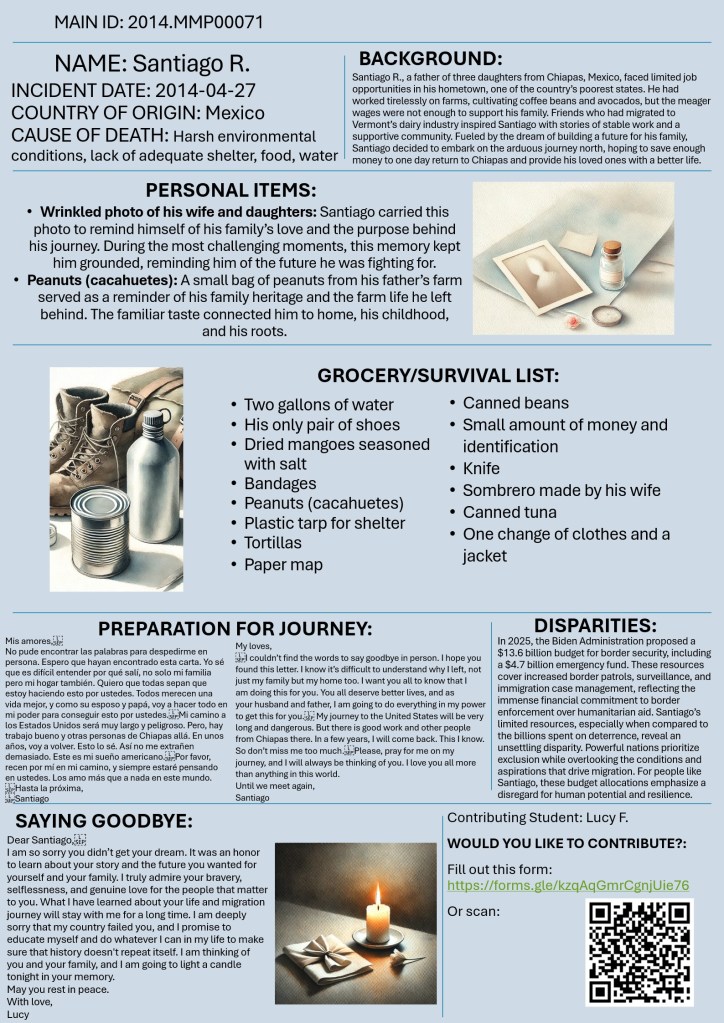
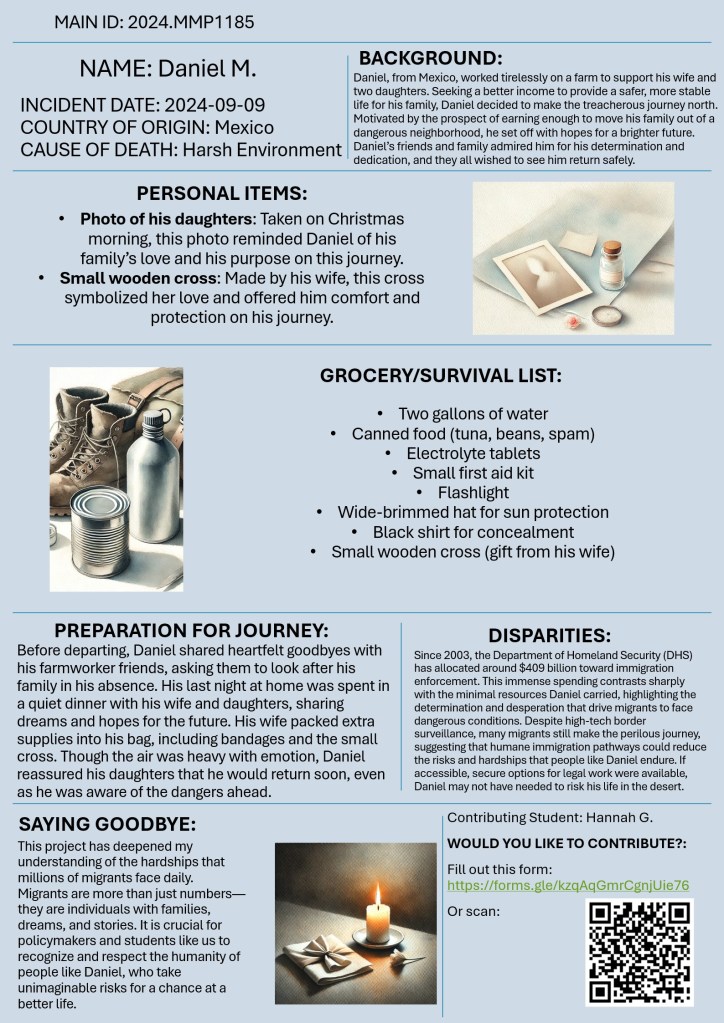
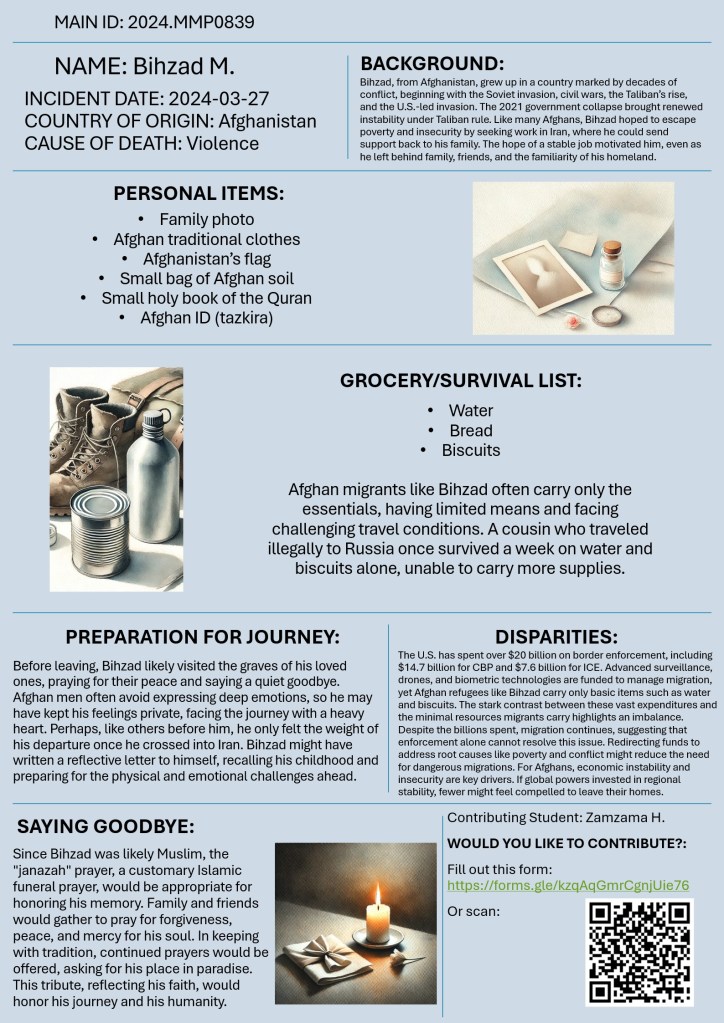
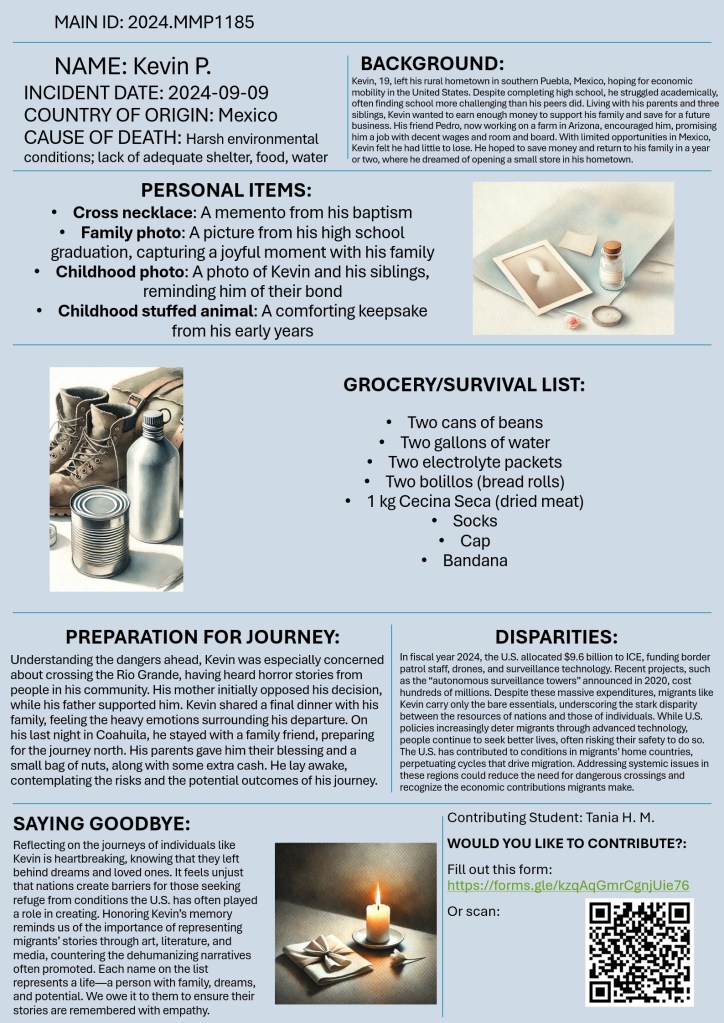
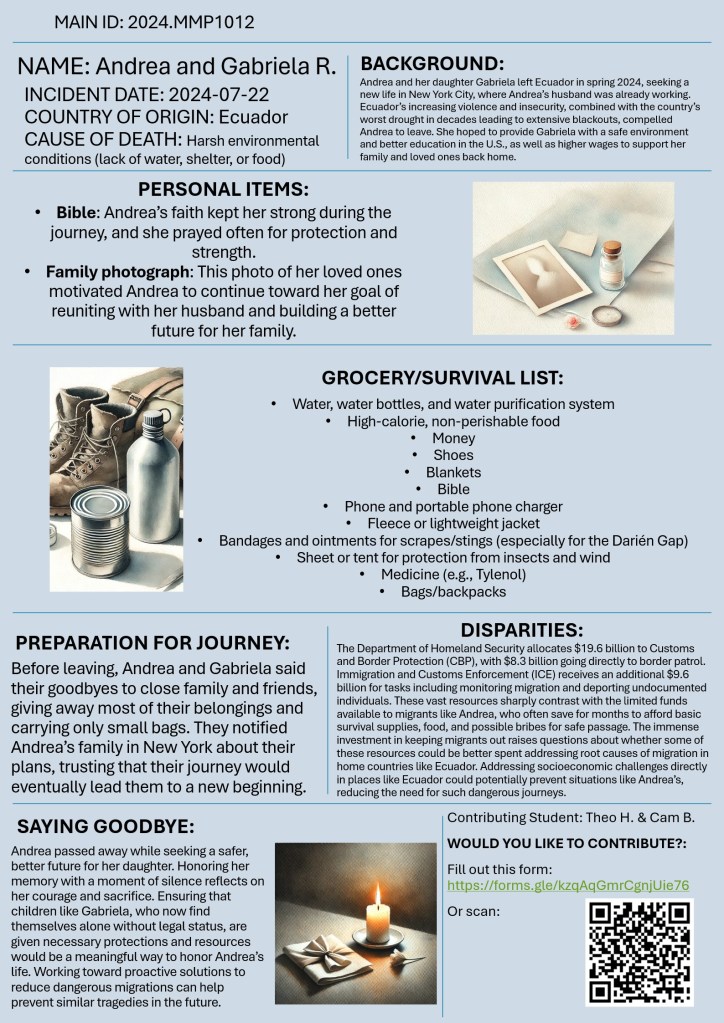
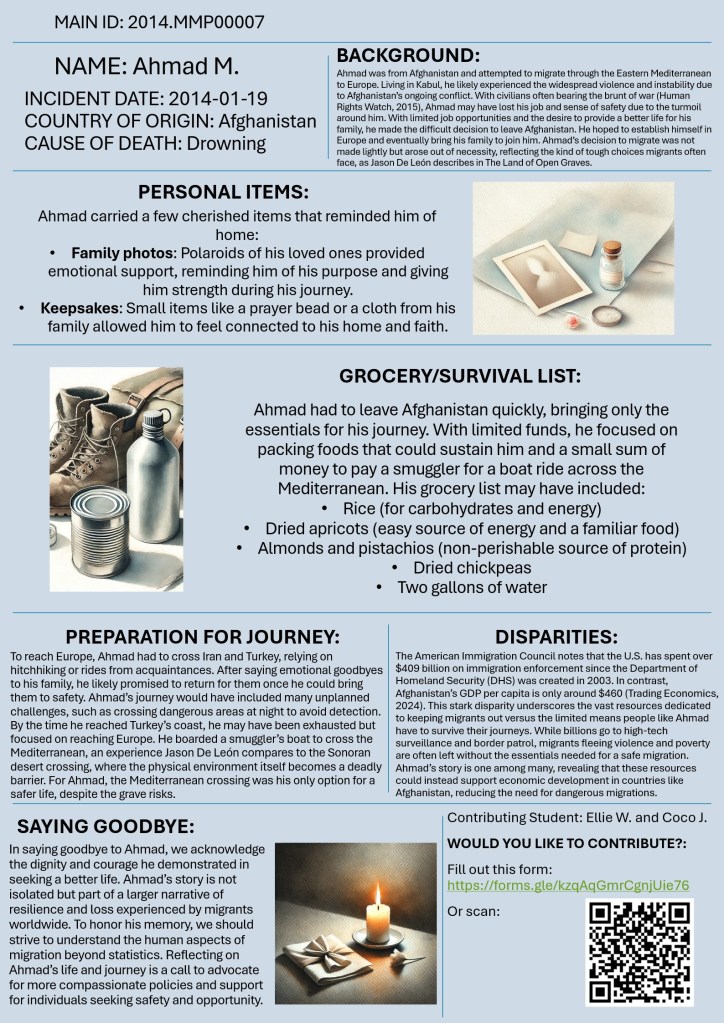
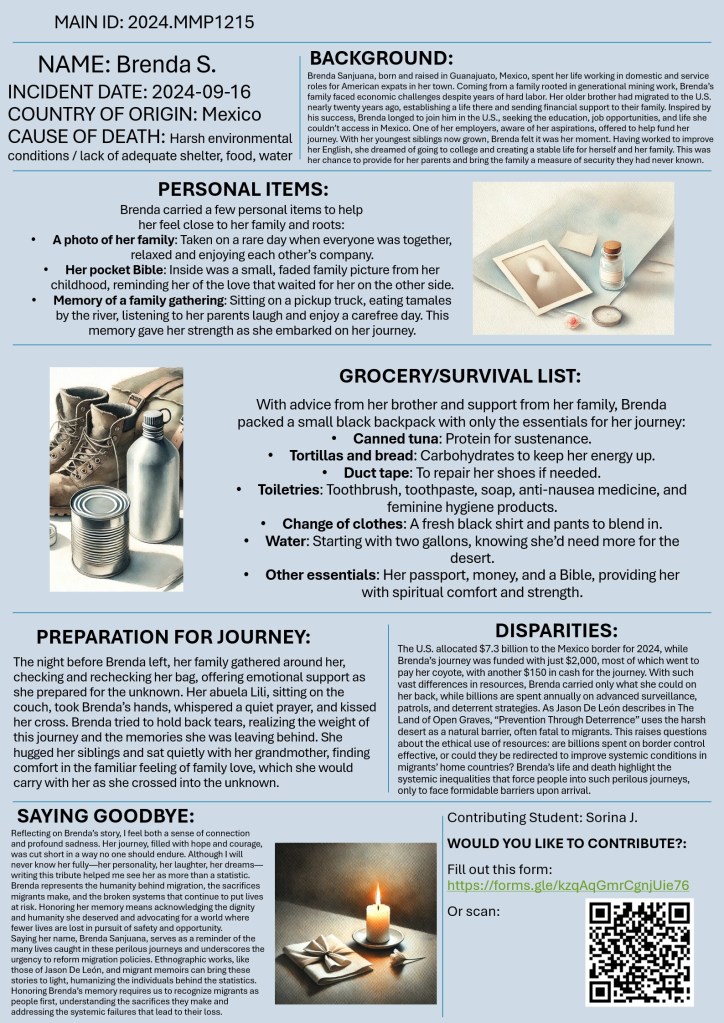
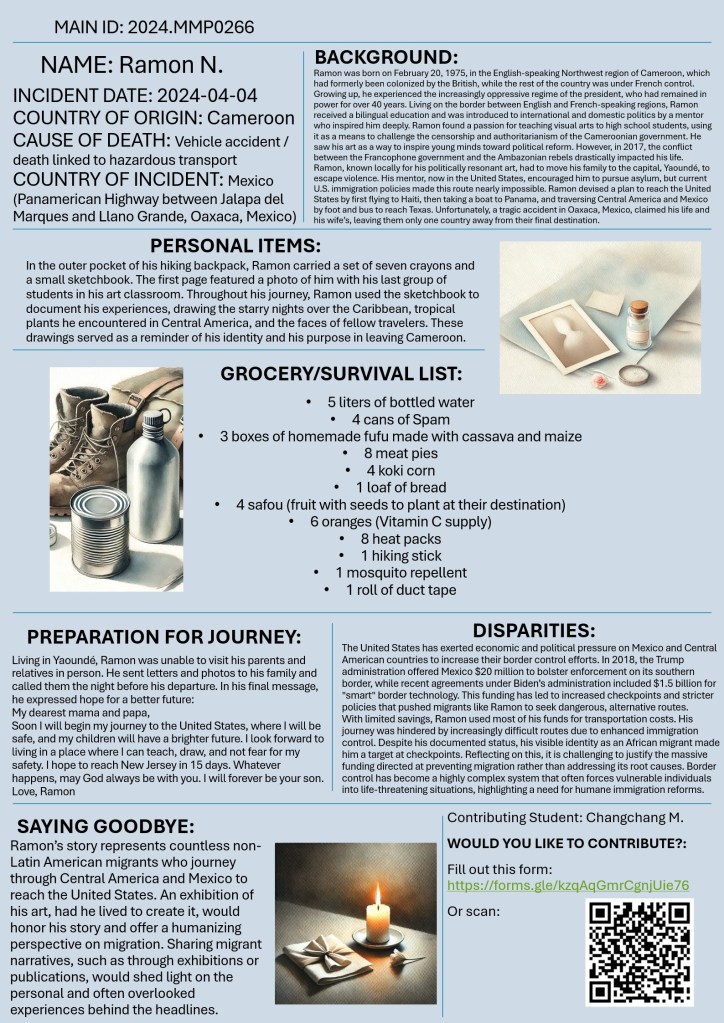
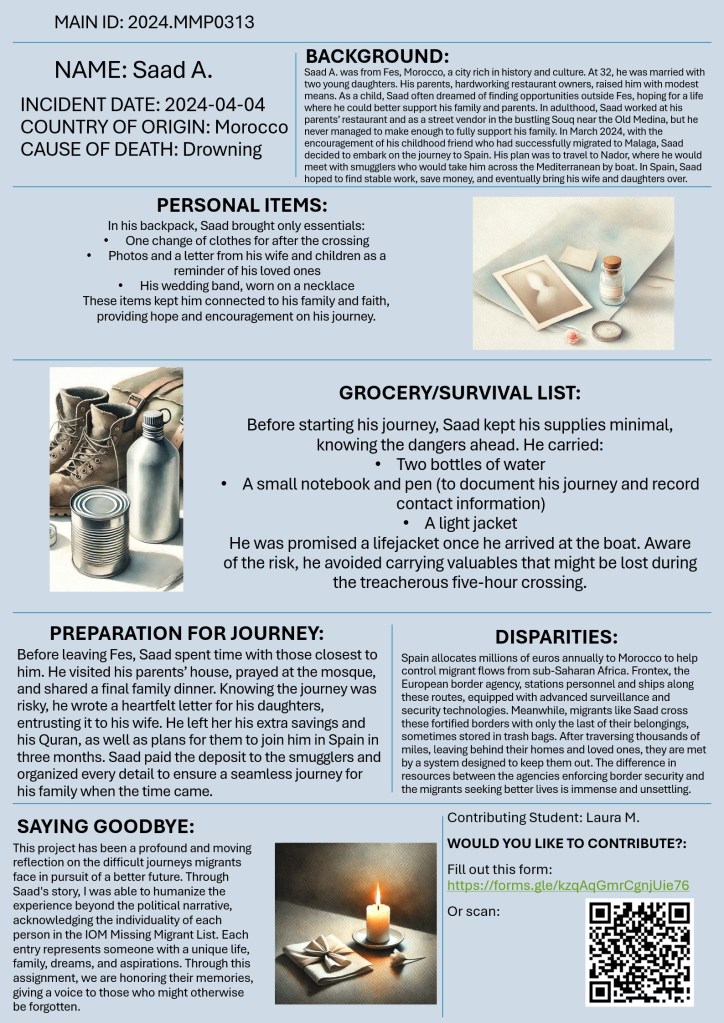
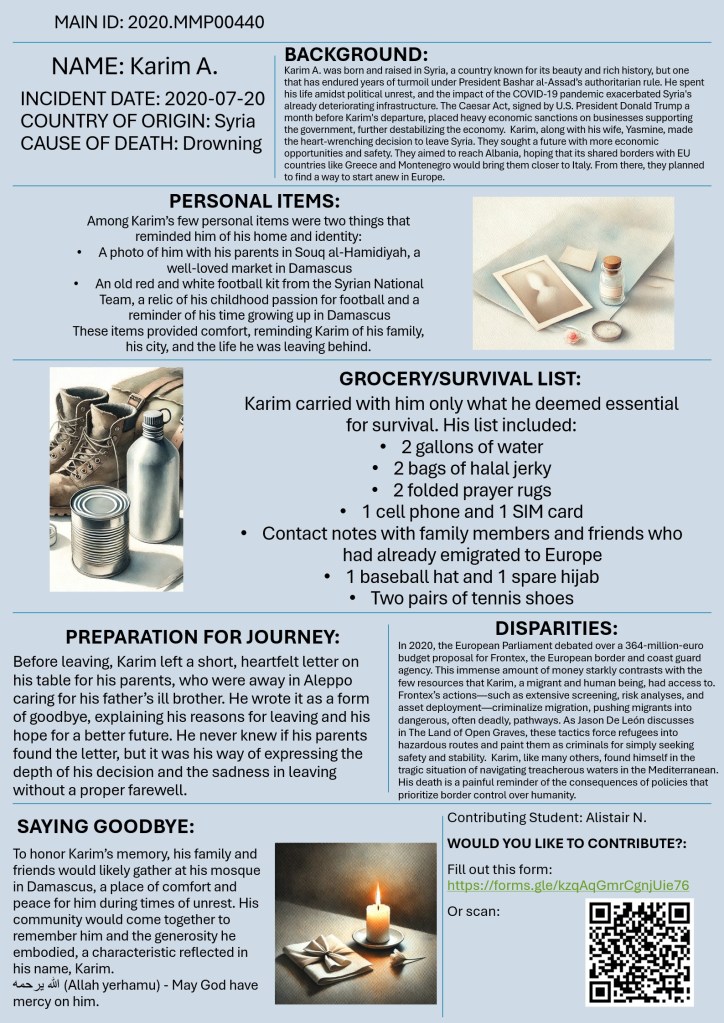
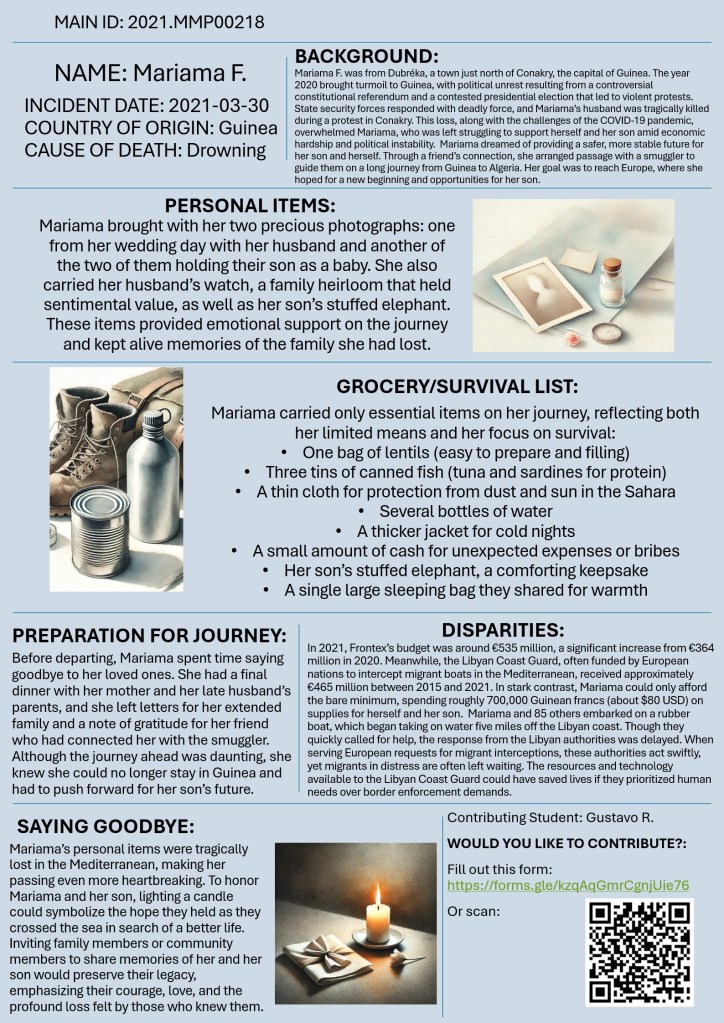
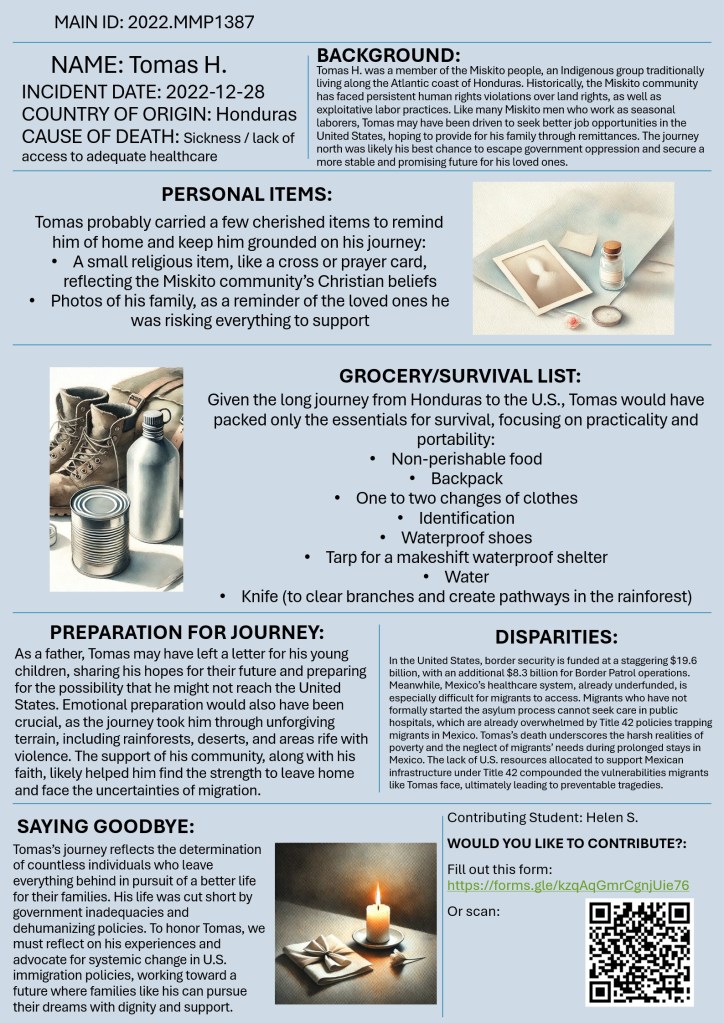
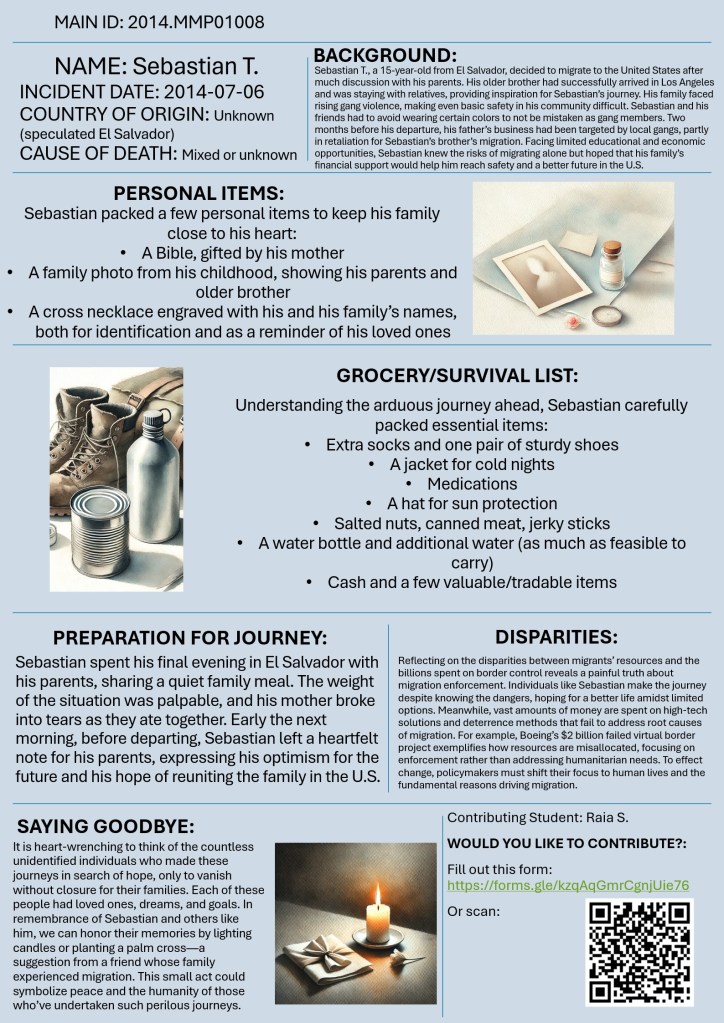
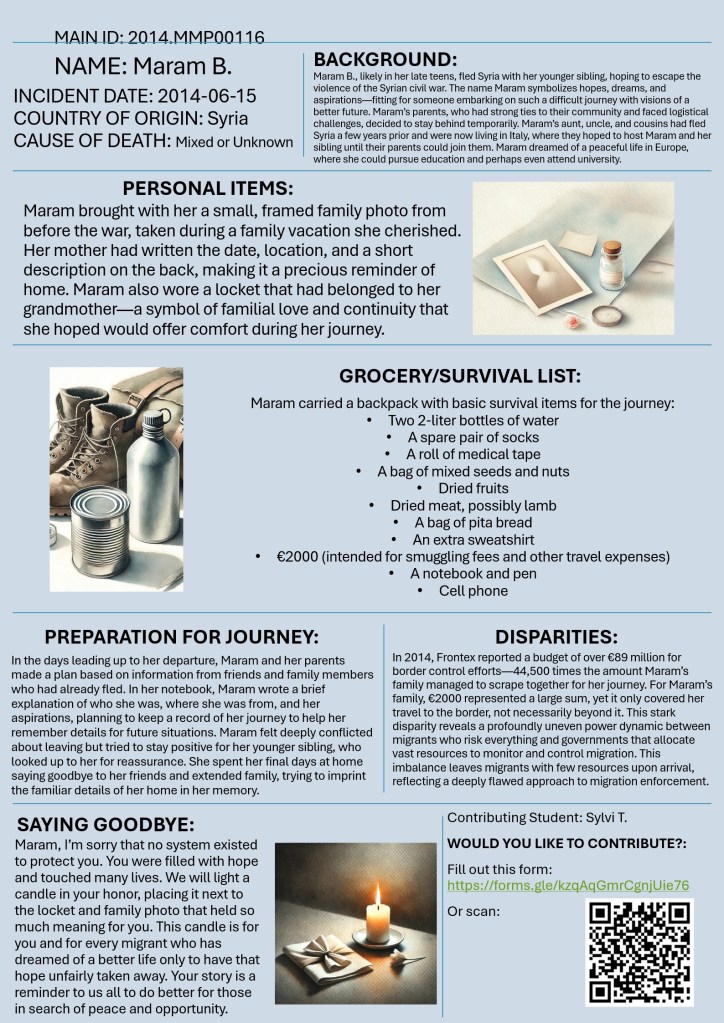
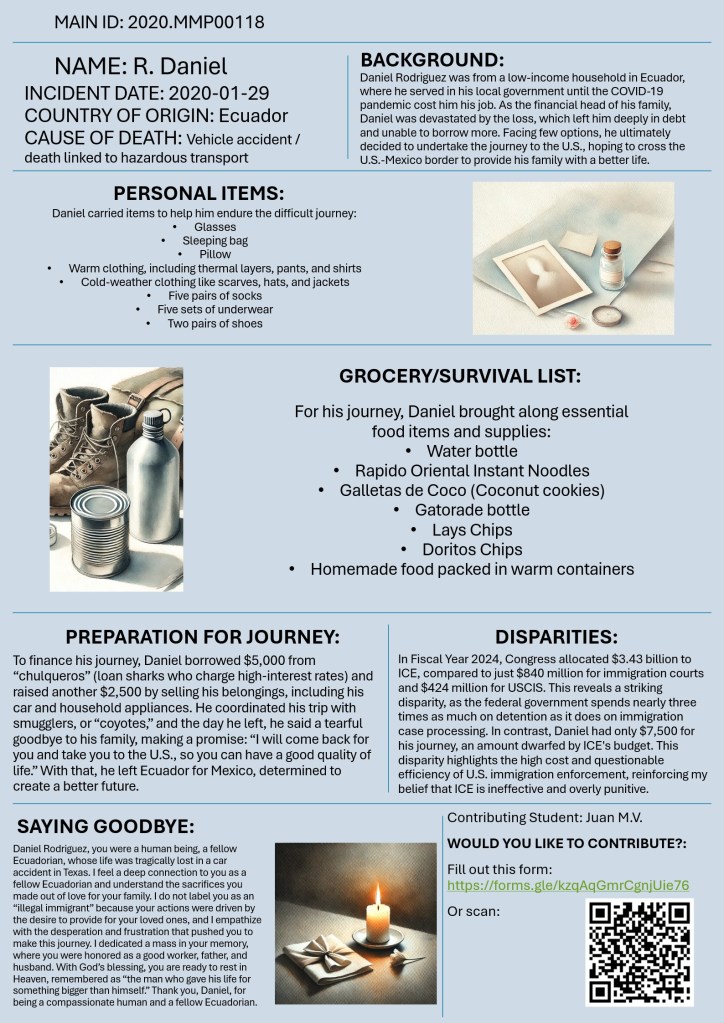
Welcome to “Missing Migrants beyond Numbers”! This initiative invites you to look beyond statistics and confront the human realities behind migrant journeys, shifting away from narratives that reduce migrants to numbers, legal status, or security concerns. Drawing from the “Missing Migrants” data from the International Organization for Migration (IOM), students were asked to reimagine the lives of those who have gone missing or lost their lives while crossing borders. This exercise aims to honor the dignity and humanity of migrants by exploring the personal stories, dreams, and daily struggles that are often obscured by policy and media.
Policies like the U.S. Border Patrol’s “Prevention Through Deterrence” (PTD) and similar European strategies push migrants into increasingly dangerous terrain, hoping that extreme conditions will discourage crossings. These policies often result in avoidable deaths and human suffering, all while governments pour billions into border surveillance and enforcement technologies that ultimately fail to address the root causes of migration. By closing off formal, safe migration pathways and erecting ever more walls, these strategies ignore human rights and disregard the complex motivations driving people to migrate. Through this exercise, we question the human cost of such deterrent tactics and consider the urgent need for humane migration policies that prioritize safe, documented avenues over a cycle of enforcement and tragedy.
Drawing on The Land of Open Graves by Jason De León, particularly Chapters 6 (“Technological Warfare”) and 7 (“The Crossing”), students considered the inequalities faced by migrants attempting to cross treacherous terrains with minimal resources compared to the billions spent on border enforcement. De León’s work illustrates the stark contrast between the U.S. Border Patrol’s budget and the simple survival items migrants carry, as well as the nerve-breaking preparations they make before their journeys, underscoring the profound disparities between migrant resilience and state security measures.
Would you like to contribute? Please fill out this form. Each form submission will help us create a new, unique poster dedicated to honoring and remembering these individuals. Your reflections help transform numbers into stories, making each migrant’s memory visible and human.
 Beyond Borders